Cranial Remolding Orthoses
Custom Baby Helmets for Plagiocephaly & Brachycephaly in London, Ontario
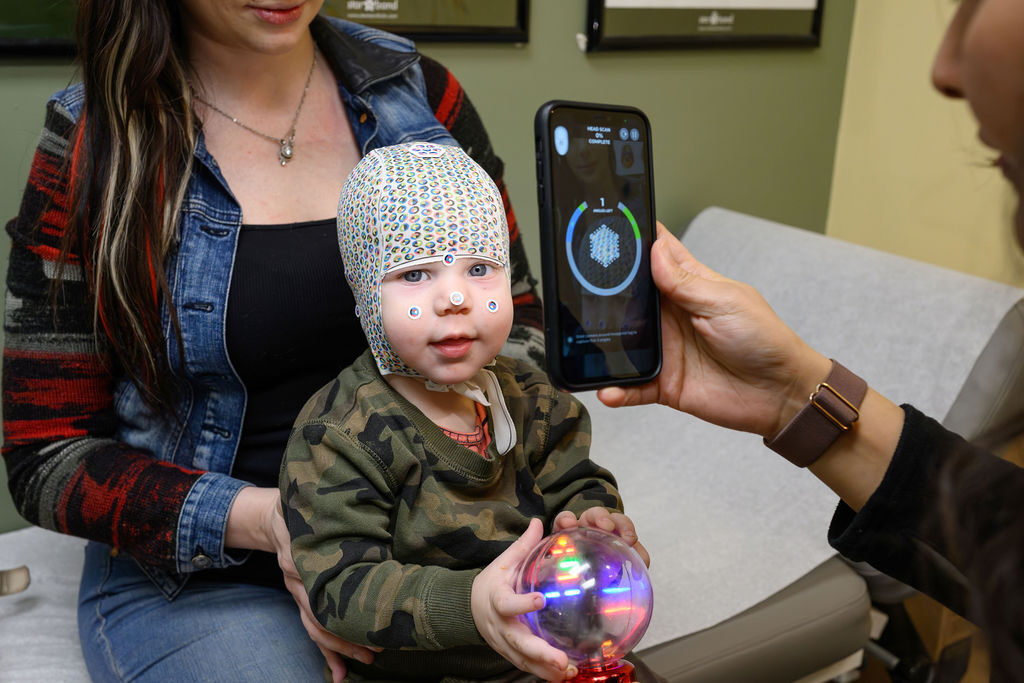
Cranial Remolding Orthoses (CROs), commonly known as baby helmets, are custom-made orthoses used to improve an infant’s head shape as they grow.
At Custom Orthotics of London, our Certified Orthotists provide cranial assessments and custom helmet therapy for babies with plagiocephaly, brachycephaly and other positional head shape differences.
If you have noticed a flat spot or asymmetry in your baby’s head, an assessment can help determine whether monitoring, repositioning, physiotherapy or cranial remolding treatment may be appropriate.
Understanding Your Baby’s Head Shape
A baby’s skull is soft and grows rapidly during the first year of life. This means that prolonged pressure on one area can influence the shape of the head.
Common positional head shape differences include:
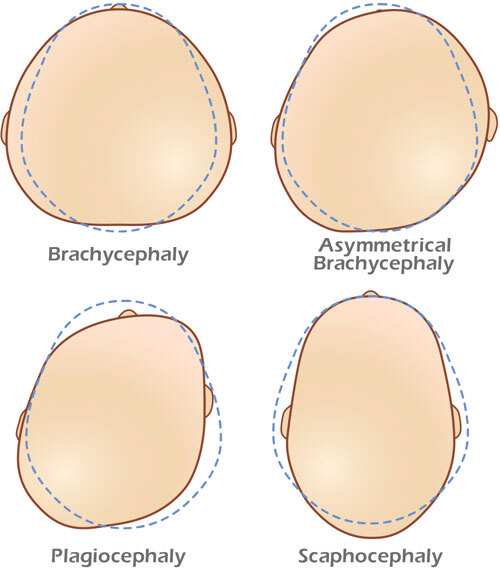
Plagiocephaly – flattening on one side of the back of the head. The head may appear asymmetrical when viewed from above, and the ear, forehead or face may also show some asymmetry.
Brachycephaly – flattening across the back of the head, which can result in a head shape that appears wider and shorter from front to back.
Asymmetrical brachycephaly – a combination of overall flattening across the back of the head with more pronounced flattening on one side.
Positional head shape differences can be associated with factors such as a preference for looking in one direction, torticollis, positioning before birth, prematurity or prolonged pressure on the same area of the head.
Not every unusual head shape is positional. If your baby’s presentation raises concerns about craniosynostosis or another non-positional head shape difference, further medical assessment may be recommended.
Does My Baby Need a Helmet?
Not every baby with a flat spot requires a helmet.
For younger babies and those with mild asymmetry, repositioning, supervised tummy time and physiotherapy may be recommended, particularly when torticollis or a strong positional preference is present.
Cranial remolding treatment may be considered when significant asymmetry persists or when a baby presents with moderate to severe flattening.
Timing is important. Helmet therapy generally does not begin before approximately 4 months of age, and treatment during periods of rapid skull growth can be beneficial. Having your baby assessed between approximately 4 and 6 months of age provides an opportunity to evaluate their head shape and determine whether additional treatment may be appropriate.
A baby older than six months is not automatically too old for treatment. Recommendations are based on your baby’s individual age, head shape, severity of asymmetry and remaining growth.
How Does a Cranial Remolding Orthosis Work?
A CRO does not squeeze your baby’s skull or force it into a new shape. Instead, it works with your baby’s natural growth.
Gentle contact is maintained over areas of the head that are more prominent, while additional space is provided over flattened areas. As your baby grows, this encourages growth toward a rounder and more symmetrical head shape.
Because babies grow quickly, the helmet is regularly assessed and adjusted throughout treatment.
What to Expect at Custom Orthotics of London
Cranial Assessment
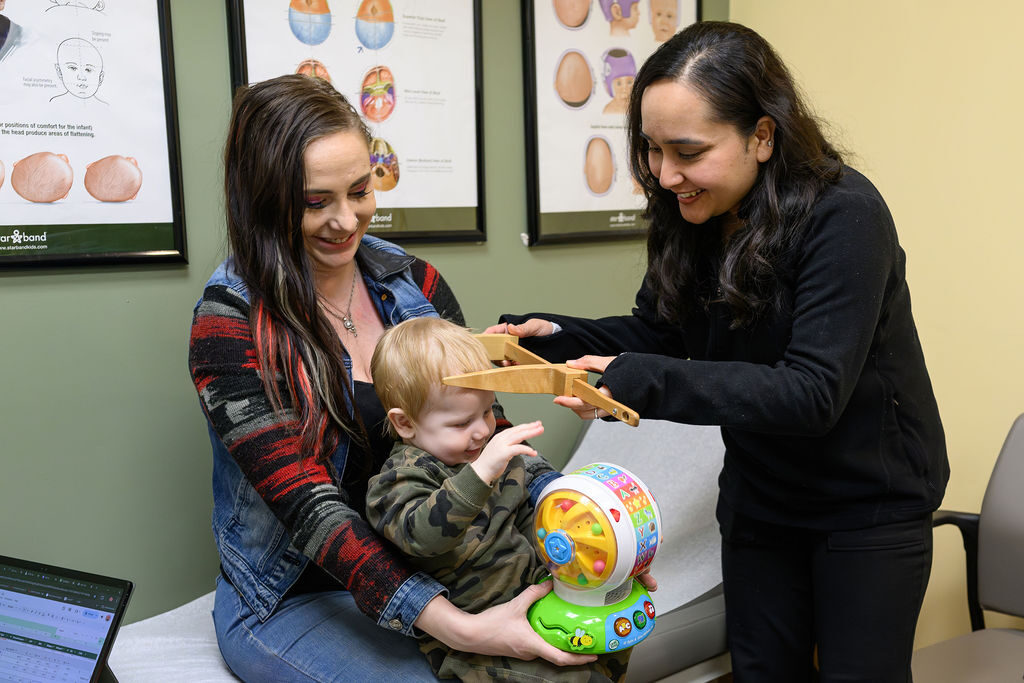
Your baby’s first appointment begins with a comprehensive assessment by one of our Certified Orthotists.
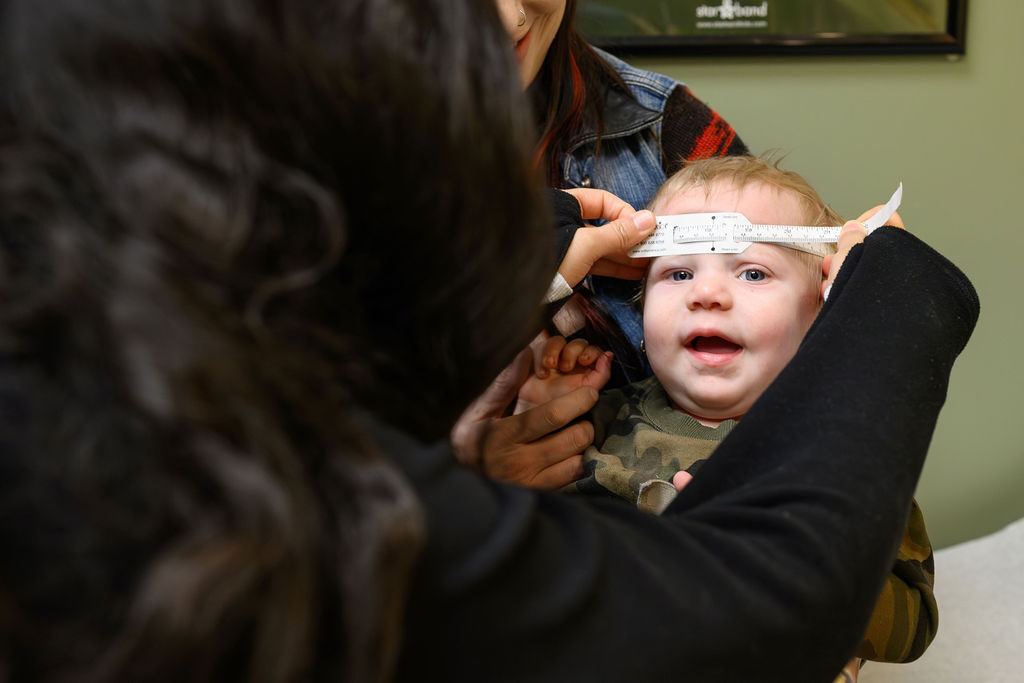
We will discuss your baby’s birth and developmental history, evaluate their head shape and take objective cranial measurements to determine the type and severity of asymmetry.
This appointment is also an opportunity to talk about your concerns and ask questions.
Not every baby we assess requires a helmet.
Depending on your baby’s age, measurements and development, recommendations may include continued monitoring, repositioning, physiotherapy or cranial remolding treatment.
3D Cranial Scan
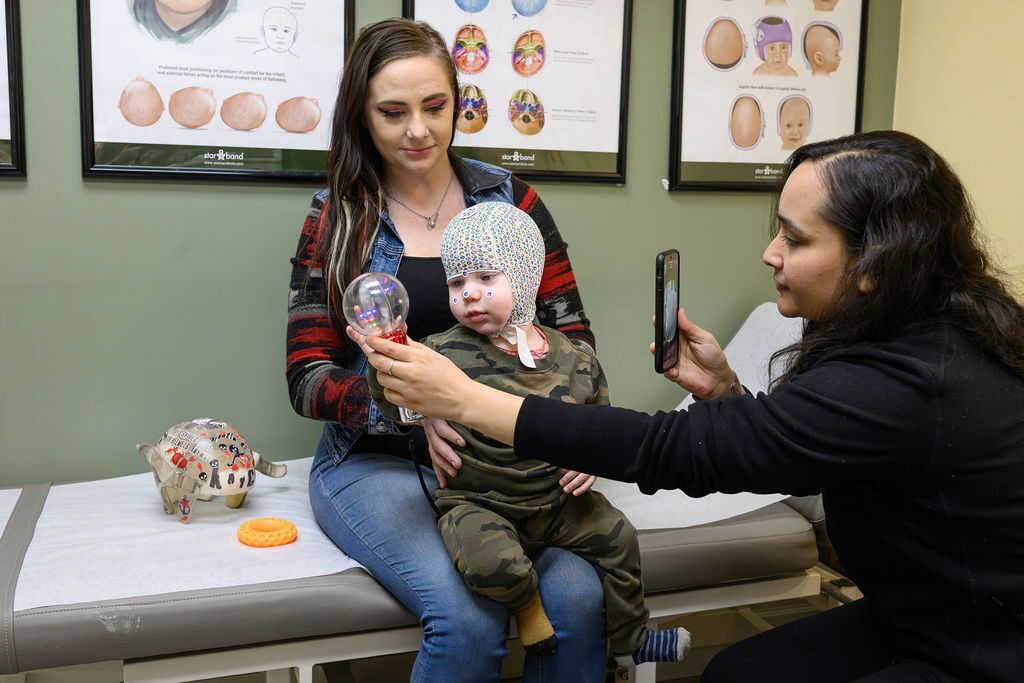
When cranial remolding treatment is recommended, we use 3D scanning technology to capture an accurate digital model of your baby’s head.
The scan is quick and non-invasive and does not expose your baby to radiation.
The digital model allows us to evaluate your baby’s head shape and create a custom Cranial Remolding Orthosis specifically for them.
Clinical measurements and photographs may also be used to document your baby’s starting head shape and monitor progress throughout treatment.
Custom Helmet Design & Fitting
Your baby’s CRO is custom designed based on their individual head shape and treatment goals.
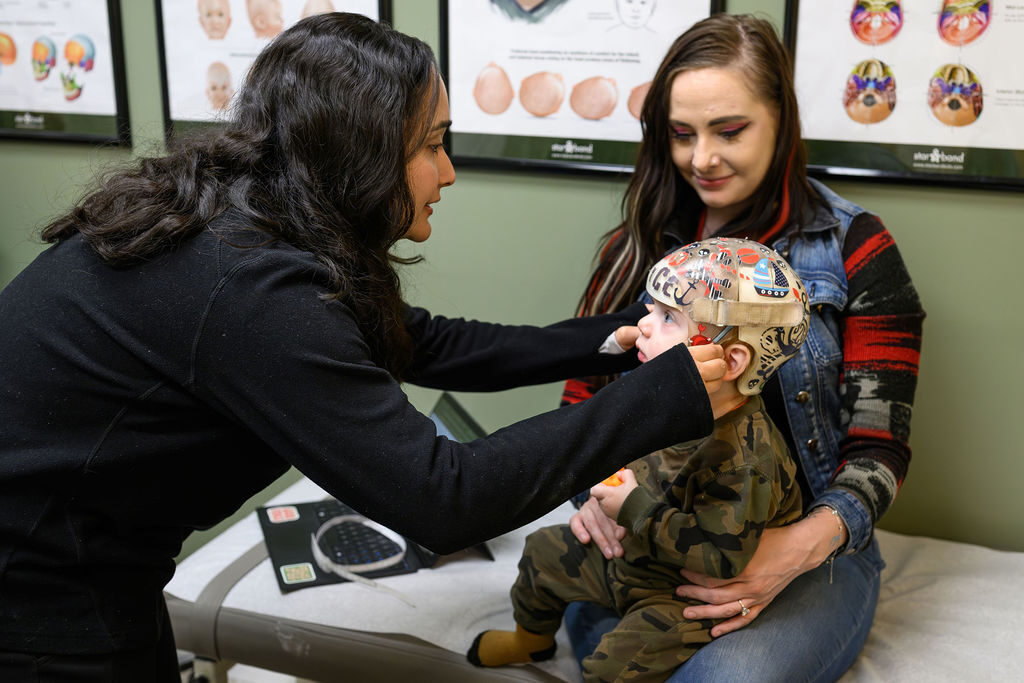
At the fitting appointment, your Certified Orthotist will carefully evaluate the fit and make any necessary adjustments.
We’ll also teach you how to put the helmet on and take it off, clean and care for it, check your baby’s skin and gradually introduce your baby to their full wearing schedule.
Regular Follow-Up & Adjustments
Cranial remolding treatment isn’t simply a matter of fitting a helmet and sending you home.
Your baby will return to Custom Orthotics of London regularly throughout treatment so we can monitor their growth, assess changes in head shape and adjust the helmet as needed.
As your baby’s head grows, areas within the helmet are progressively adjusted to continue providing room for growth where it is desired.
Measurements, clinical photographs and/or additional 3D scans may also be used to document progress.
We’ll continue to monitor your baby’s head shape and helmet fit until treatment is complete.
Frequently Asked Questions
How long does helmet therapy take?
Treatment commonly lasts several months, although every baby is different. Treatment time depends on your baby’s age, type and severity of asymmetry, growth rate and response to treatment.
How often will my baby wear their helmet?
Cranial Remolding Orthoses are generally prescribed for approximately 23 hours per day once the initial break-in period is complete. Your Orthotist will provide a wearing schedule specific to your baby.
What if my baby also has torticollis?
Torticollis and positional head shape differences frequently occur together. If your baby has limited neck movement or a strong preference for looking in one direction, physiotherapy may be recommended alongside cranial remolding treatment.
Concerned About Your Baby’s Head Shape?
It can be difficult to know whether a flat spot will improve with growth and repositioning or whether additional treatment should be considered.
That’s what the assessment is for.
Our Certified Orthotists will evaluate your baby’s head shape, take objective measurements and explain what we find.
Custom Orthotics of London — Serving families in London and Southwestern Ontario.